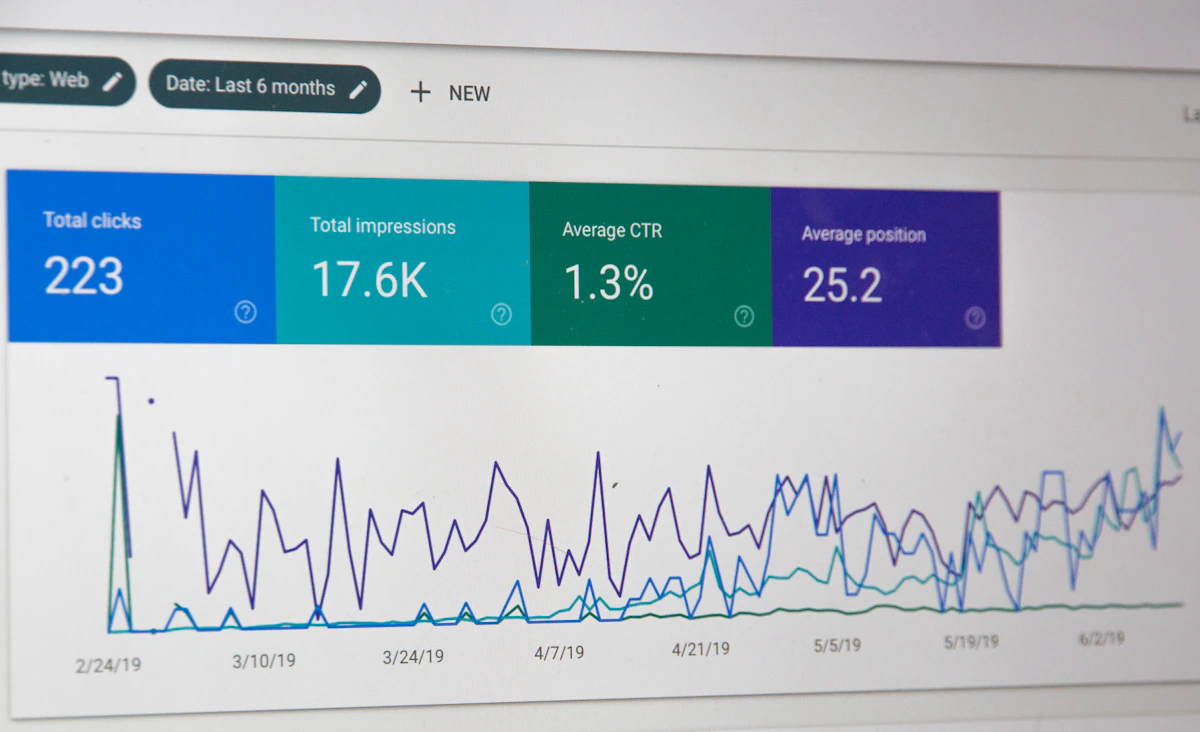
Only 39% of companies report measurable EBIT impact from AI. If your board is asking for ROI and you don't have clean numbers yet, here's how to reframe the conversation - lead with the operational metrics that predict financial return before it appears on a P&L.
The CFO leaned forward and said: "I need to see ROI. Not productivity. Not adoption. ROI."
I've been in that room - not as the one being asked, but working alongside the leaders who are. And that sentence, or something close to it, ends more AI investment conversations prematurely than any technical failure ever will.
The problem isn't that the AI isn't working. It's that the wrong metrics are being used to evaluate the right stage of investment.
Why Only 39% of Companies Can Show AI Financial ROI Right Now
According to The State of AI by McKinsey & Company, only 39% of organizations report measurable EBIT impact from AI - even though 88% are already using AI in at least one business function. Read that gap again. Almost every company is investing. Less than half can show the P&L impact.
Two-thirds of organizations are still in the pilot or early experimentation phase. Which means the majority of companies presenting AI investments to their boards are in a stage where financial return hasn't materialized yet - and asking for EBIT proof is the equivalent of asking a brand campaign to show revenue in month two.
The issue isn't the investment. The issue is the measurement framework being applied to it.
The Metrics That Actually Predict AI ROI Before It Shows Up in Revenue
I used to think the answer was better financial modeling - smarter projection methodology, cleaner attribution. I'm less sure about that now.
What I've seen work is leading with operational metrics that precede financial return. Not because they're easier to report, but because they're the actual causal chain. Financial ROI doesn't appear first. It shows up after something operational has changed, sustained, and scaled.
The metrics worth putting in front of a board at this stage:
Operational leading indicators
- Time saved per team member per week (converted to FTE capacity, not cost savings)
- Error rate reduction in specific workflows - customer escalations, billing disputes, QA cycles
- Ticket deflection rates in support, with handle time comparisons before and after
- First-response time changes in customer-facing functions
Adoption and maturity signals
- What percentage of the relevant team is using the tool consistently (not just licensed)
- How many use cases have moved from pilot to production
- Where the AI has been removed from a workflow and what happened - this reverse test is revealing
- Whether the team is using it to do the same work faster, or using it to do work they couldn't do before
The second category matters more. Speed gains commoditize. Capability gains compound.
How to Frame the Board Conversation Without Losing Credibility
The framing failure I see most often is the defensive stance - presenting AI ROI as a justification exercise. That posture signals uncertainty to a board, even when the numbers are reasonable.
A more effective approach is to position the organization explicitly within the investment maturity curve, then anchor expectations to it.
Something close to: "We're 14 months into deployment. Most organizations at this stage are measuring adoption and process efficiency - that's what we're doing too. The financial return follows from these leading indicators. Here's the timeline we're tracking against, and here's what we'd need to see to believe we're on or off course."
That's not spin. That's appropriate investment stage framing. PwC's 2026 Global AI Jobs Barometer found that only 1 in 8 CEOs see both increased revenues and reduced costs from AI - which means presenting operational leading indicators isn't making excuses, it's describing where 87% of AI-investing companies currently sit.
The board didn't expect digital marketing to show ROAS in the first quarter. They should be applying the same logic here.
This is where the conversation usually either opens up or shuts down.
What Boards Are Actually Asking When They Ask for ROI
The explicit question is about numbers. The implicit question is almost always about confidence.
When a CFO asks for ROI, they're often asking: do you know what you're doing, do you have a plan for when this pays off, and are you watching the right things? Those are answerable questions even when the P&L hasn't moved yet.
I've watched leadership teams walk into board reviews with defensible financial projections and leave the room having lost confidence - because the framing read like a hope, not a plan. And I've watched teams with incomplete financial data walk out with the board's backing because they named exactly where they were, what they were watching, and what would change their view if it didn't develop as expected.
The metrics are part of it. The posture is the other part.
Boards tend to extend patience to investment stages they understand and distrust stages they can't see into.
Setting Realistic AI ROI Timelines for Your Board
The honest answer on timelines is that they vary by use case, and anyone who tells you otherwise is simplifying in ways that will hurt you later.
What tends to hold across implementations I've seen:
Months 1-6: Adoption, configuration, workflow integration. Efficiency gains start appearing but are inconsistently distributed. Some teams get faster. Others are still fighting the tool.
Months 7-18: Process stabilization. The metrics that matter start to emerge cleanly. Ticket deflection rates become measurable. Error rates change. Time-to-completion shifts are visible in the data. This is the stage most organizations are at when they face board scrutiny.
Months 18-36: Financial translation. The operational improvements start appearing in cost structures and capacity reallocation. Revenue impact, where it exists, tends to come from the capability gains - the things the team can now do that they couldn't before.
The problem is that boards want the year-three numbers in the year-one review. And the leader who promises them usually regrets it.
The more defensible position is to show the year-one operational metrics, map them explicitly to the year-three financial outcomes, and describe the decision points along the way where the investment thesis would be revised if the leading indicators don't develop as expected.
That's not a soft answer. That's how you present an investment with integrity.
What a Board-Ready AI ROI Presentation Actually Contains
Not everything needs to go in - the goal is not comprehensiveness, it's confidence.
Lead with
- Investment stage framing: where you are in the maturity curve, and what stage looks like at this point in other organizations (use external benchmarks - McKinsey and PwC data are credible here)
- The two or three operational metrics that best predict financial return for your specific use case
- Trend data, not point-in-time snapshots - boards trust direction more than single data points
Support with
- Adoption rate by team or function, not just overall licensing numbers
- One or two specific workflow changes where the before/after is unambiguous
- An honest assessment of where the tool hasn't performed as expected - this is the credibility signal most presentations omit
Close with
- The financial translation timeline, explicitly tied to the operational metrics already presented
- The decision points: what would make you accelerate investment, and what would make you pull back
- What you're watching that you'd want the board watching with you
That last section is the one that changes the room. It turns a review into a partnership.
I don't know if this gets easier as AI becomes more standard practice. I think the board scrutiny may actually increase as expectations calibrate to the pace of leaders who moved faster. The organizations that build the habit of reporting operational leading indicators now - before financial ROI appears - will be better positioned to tell a coherent story at every stage. Not because it's good communication practice, but because they'll actually know what's working.