88% of companies are running some form of workflow automation. Only 39% report any business impact. The gap isn't the tool. Here's what's actually getting in the way.
Last year, I worked with a team that had just deployed a workflow automation platform across their CS and ops functions. Three months evaluating vendors. Another two implementing. They were proud of what they'd built.
Six months later, the team lead sent me a message: "The platform's running. But honestly? We're not sure what changed."
Tickets routing the same way. Handoffs the same. Reporting was cleaner, sure. But the actual work? Same as before. Just with a fancier dashboard sitting on top of it.
I've heard this more times than I'd like to admit.
Why Workflow Automation Platforms Fail to Deliver ROI
This isn't one team's problem. The State of AI 2025 - McKinsey's global survey across nearly 2,000 organizations in 105 countries - found that 88% of companies are now regularly using AI in at least one business function. That's up from 78% the year before.
And yet only 39% report any EBIT impact at the enterprise level.
That's not a technology gap. That's a workflow gap.
The companies seeing real results from automation aren't the ones who found the best platform. They're the ones who redesigned how work actually gets done before they bought anything. McKinsey's research is explicit: AI high performers - the 6% seeing significant enterprise-level value - are nearly three times more likely than their peers to have fundamentally redesigned their workflows, not just layered automation on top of old ones.
That's the actual gap.
The Workflow Automation Mistake Enterprise Teams Keep Making
The standard playbook most teams follow goes like this:
- Find the repetitive tasks
- Pick a platform to automate them
- Deploy
- Declare success
Step one is where it breaks. "Repetitive tasks" sounds like the right target. But repetitive doesn't mean automatable. Some tasks repeat constantly because the process producing them is broken. Automating a broken process makes it faster. It does not fix it.
I’ve watched this happen in support operations more times than I can count. A team would automate their ticket routing - and it would work perfectly. Tickets are routed in seconds instead of minutes. SLA numbers improved. Leadership was happy.
But the resolution rate didn't move.
Because routing wasn't the problem. The workflow behind routing - how agents triaged, how escalations got decided, how knowledge got shared mid-ticket - was still manual, still inconsistent, still dependent on whoever happened to be online. The automation handled the symptom. Nobody touched the workflow underneath it.
What Workflow Redesign Actually Means (And Why "Add Automation" Is Not Enough)
McKinsey's language is deliberate. They don't say "add automation." They say "fundamentally redesign individual workflows." The word fundamentally is doing real work there.
Redesigning a workflow means starting from the outcome - a resolved ticket, a renewed account, an approved invoice - and asking what sequence of steps actually gets you there. Then asking which steps require human judgment and which follow rules.
Most teams skip that question. They look at their current process, find the steps that feel manual and annoying, and automate those. The result is a faster version of the same broken process.
The teams seeing ROI ask a different question: "If we were designing this workflow from scratch today, what would it look like?"
The answer is almost always different from what exists.
Which Workflows to Automate First in 2026 (And Which Are Traps)
Not every workflow earns automation investment equally. Three categories worth knowing before you open a vendor comparison:
High-value automation targets:
- Data routing and classification. Moving the right information to the right place, fast, based on rules or pattern recognition. High volume, consistent input, low judgment required. This is the clearest early win in almost every business function.
- "Just checking in" messages sent on a timer. Any workflow where a human manually follows up based on elapsed time is a direct automation candidate. Agents do this better, at any volume, without forgetting.
- Approval chains where the logic is written down. If you can draw a decision tree for it, you can automate it. The exception: approvals that require reading relationship history, tone, or subtext.
Workflows that look automatable but are not ready:
- Escalation judgment. Deciding when something genuinely needs a human is harder than it looks. Agents are improving fast here, but the cost of a wrong call is high. Keep a human in this loop until you've seen the accuracy rate hold up in your own environment - not just in the vendor's benchmark.
- High-stakes outbound communication. Drafting assistance is fine. Autonomous sending to your most important accounts, without a human reviewing? Not yet. The relationship cost of a poorly timed or misjudged message is hard to recover.
The trap category - repetitive tasks that are actually judgment calls in disguise:
Account health scoring is the one I see most often. Teams automate the score. But what the score should trigger - outreach, escalation, or watchful waiting - still requires context the model doesn't have. Automating the score without redesigning what happens after it is a common way to spend a lot on a platform and see nothing move.
How to Choose a Workflow Automation Platform in 2026
Searches for "workflow automation platform" are up +99X in 2026 - the fastest-growing business technology search term tracked by Exploding Topics right now. A lot of teams are evaluating. Most are asking the wrong question.
Wrong question: "Which platform has the most features?"
Right question: "Which platform fits how our workflows actually need to run - and how well can we extend it when they change?"
Before you evaluate any vendor:
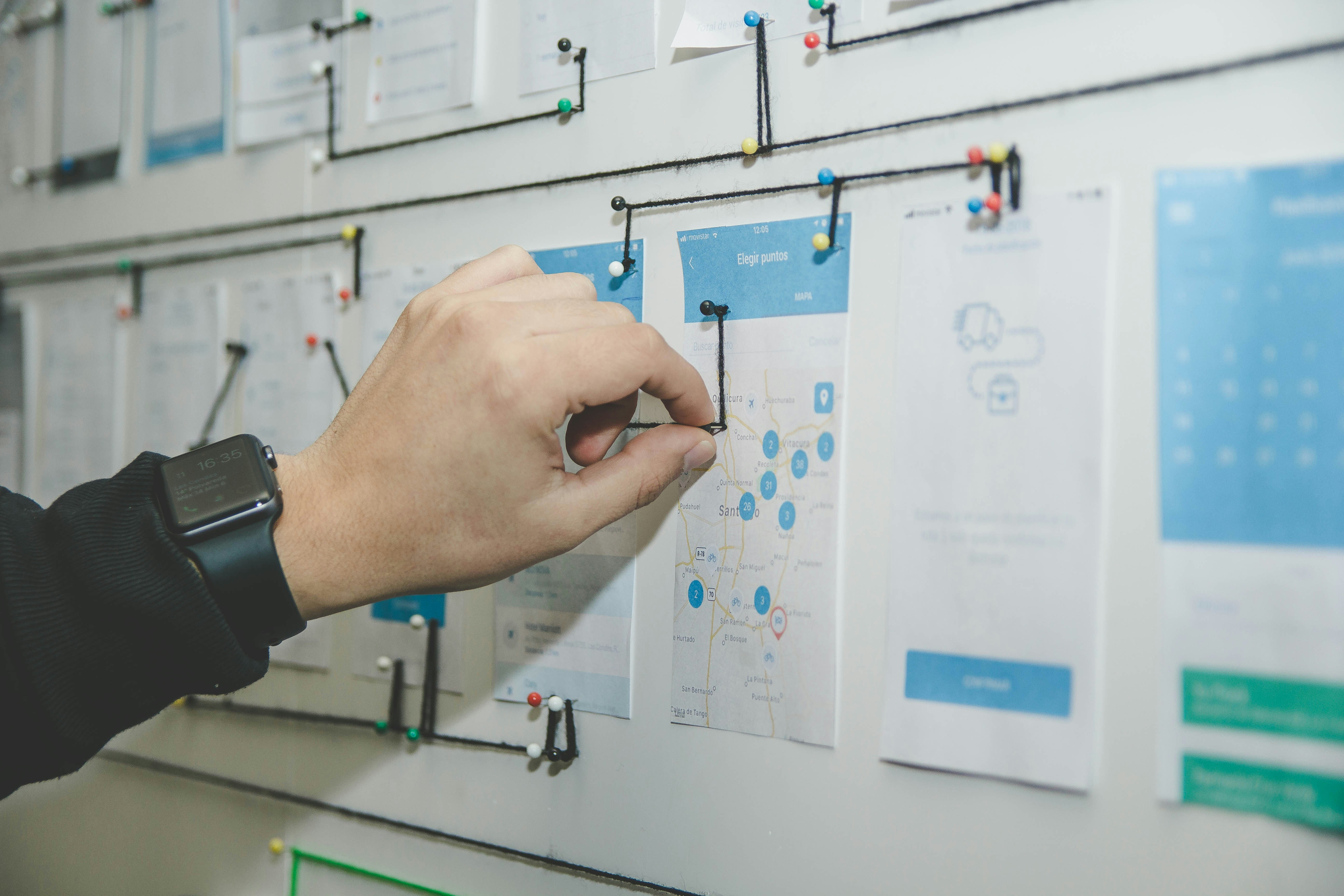
- Pick three or four workflows and map them end-to-end - not just the annoying steps in the middle, but the full sequence from trigger to outcome. Most teams have never done this for their own processes.
- Be honest about judgment. Most teams overestimate how much human judgment their workflows actually require. If you can write down the rule, it can probably be automated.
- Define success in numbers before you start. Not "team feels less overwhelmed." Actual metrics, measured at 90 days.
During vendor evaluation:
- Insist on a pilot with a real workflow, not a curated demo. Vendors who hesitate here are telling you something worth knowing.
- The 20% test: ask how the platform handles exceptions - the cases that don't follow the expected pattern. That's where automation collapses in production, and most demos never show it.
- Find a team that's been live on the platform for 12 months and ask them what they'd do differently. A fresh deployment customer will tell you how excited they are. A 12-month customer will tell you the truth.
I'll be honest - I don't know which platform wins in two years. The space is moving fast enough that any comparison table you read today will be partially out of date before you finish procurement. What I'm more confident about: the platform matters less than whether you've done the workflow design work before you deploy it.
What the Teams Seeing Real Results Do Differently
There's a clear pattern in the engagements where automation actually delivers - across every organization I've observed closely. It comes down to sequencing.
Teams that see results:
- They start with the business outcome. Then trace back to the workflow. Then pick the tool. That order matters more than any feature comparison.
- The workflow gets redesigned before automation is deployed - not shaped around the platform after the fact.
- Every automated step has a named owner and a documented fallback for when it fails. Because it will fail.
- The first 90 days are treated as a learning phase, not a victory lap.
Teams that don't:
- They buy the platform first, then try to fit their workflows to it. The workflows end up shaped by the tool's logic, not the business outcome.
- Existing steps get automated without anyone asking whether those steps should exist at all.
- Success gets measured by whether the deployment happened, not by what changed in the numbers.
- The next workflow gets started before the first one is stable, which means the problems from deployment one follow everything that comes after.
The difference isn't resources or platform sophistication. It's sequencing and the willingness to slow down at the design stage.
Closing
Workflow automation is not a technology problem. It stopped being that a couple of years ago.
The platforms exist. The capability is real. The question now is whether teams are doing the workflow redesign work that makes the platform useful - or whether they're buying tools and hoping the tooling does the thinking.
McKinsey's research gives a number to this: 61% of organizations using AI and automation are not seeing enterprise-level financial impact. Most of those aren't using the wrong tools. They skipped the step that makes the tools matter.
That step happens before the procurement process. It happens in a room with a whiteboard, mapping what actually needs to change.
It's slower. It's less exciting than a vendor demo. And it's the only part that actually determines whether the investment shows up in the numbers.